 Healthy Feet

Tea tree oil, distilled from the leaves of the Australian Melaleuca alternifolia tree, is the most researched natural remedy for nail fungus. It does have antifungal power. The catch is that it works slowly and rarely clears an infection completely on its own.
What the studies show
In the best-known trial (1994, 117 people), 100% tea tree oil applied twice daily for six months was compared with 1% clotrimazole solution, a standard antifungal. Results were similar: about 60% of people in both groups saw their nails improve, and around 1 in 5 had the fungus cleared on testing. A later small trial combining tea tree oil with an antifungal cream did better than tea tree alone. In lab tests, tea tree oil's main compound, terpinen-4-ol, kills the fungi that cause nail infections.
How to use it
- Wash and dry your feet thoroughly, including between the toes.
- Trim the nail and gently file its surface so the oil can penetrate.
- Apply a few drops to the whole nail, under the tip and on the surrounding skin, twice a day.
- Let it soak in for a few minutes before putting on clean cotton socks.
- Continue every day until a healthy nail has fully grown out, which is often 9 to 12 months.
Studies used 100% oil on the nail, but pure oil can irritate the skin around it. Many people dilute it with a carrier oil such as almond, jojoba or coconut oil, or use a ready-made blend.
Side effects and safety
- Redness, itching or a rash in some people; do a patch test on your arm first.
- Never swallow tea tree oil; it is toxic if taken by mouth. Keep it away from children and pets.
- Old, oxidized oil irritates more, so keep the bottle closed and away from light.
- Do not use on broken skin, and see a podiatrist first if you have diabetes.
Tea tree alone or in a blend?
Pure tea tree oil is cheap and has the most research. Blends add other antifungal oils such as thyme (thymol), oregano (carvacrol) and clove (eugenol), plus moisturizing carrier oils. There are no head-to-head trials, but a blend can be gentler on the skin and more pleasant to use daily, which matters for a treatment you need to stick with for months.
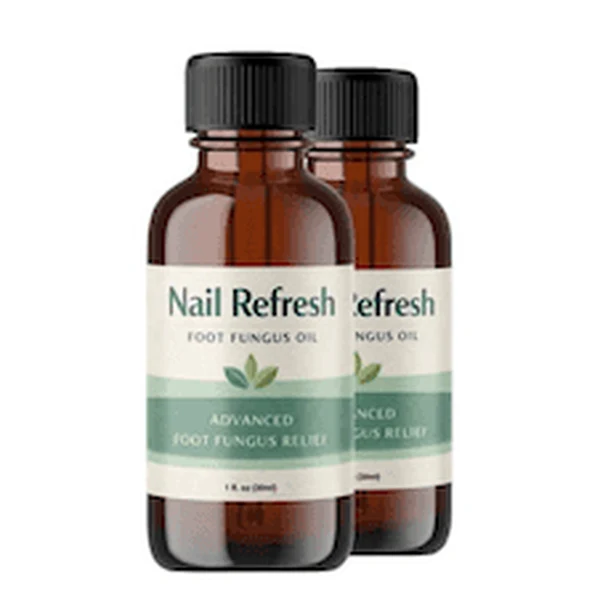
Nail Refresh
Tea tree, thyme, oregano and clove oils in almond, jojoba and rosehip oil. Read our review for what the label shows and what it does not. · Read our full review
from $39$69per bottle in the 6-pack
Check today's price →Sold by the maker · 180-day money-back guarantee
Sources
- Comparison of two topical preparations for the treatment of onychomycosis: Melaleuca alternifolia (tea tree) oil and clotrimazole – Journal of Family Practice, 1994 (PubMed)
- Tea Tree Oil: Usefulness and Safety – NIH NCCIH
- Melaleuca alternifolia (Tea Tree) Oil: a Review of Antimicrobial and Other Medicinal Properties – Clinical Microbiology Reviews, 2006 (PubMed Central)
Keep reading
 Toenail fungus home remedies
 Yellow toenails
Frequently asked questions
How long does tea tree oil take to work on toenail fungus?
You may see new, clearer nail growing at the base after 2 to 3 months, but replacing the whole toenail takes 9 to 12 months or more.
Should I dilute tea tree oil for nail fungus?
Studies used undiluted oil on the nail itself. If the skin around the nail gets red or itchy, dilute it about 1 part tea tree to 1 part carrier oil, or use a ready-made blend.
Can tea tree oil make nail fungus worse?
No, but it can irritate the skin around the nail. Stop if you get a rash, blistering or swelling.